

If I had to change careers today, here’s exactly how I’d do it - without starting from scratch.
I was pregnant, 8 years out of tech, and gunning for my 5th career pivot.

If I had to do it all over again, I wouldn’t panic.
I’d pivot - on purpose.
Because I know exactly how to pivot into a new, aligned role without starting from scratch.
And I know how to do it without under-earning, and without pretending my past experience didn’t count.
I know this because I’ve done it - five times in ten years.
Let’s look at all of my past roles - looks like a frantic game of musical chairs 🫣:
Frontend Developer → IT Auditor → Operations Manager → Business Transformation → Growth & Partnerships Manager.
Don’t worry, I didn’t plan any of this.
So even to me, it looked messy at first, and I often felt like I didn’t know what I was doing (for a while, I didn’t).
Every move felt like I was “behind.” Like I was somehow doing adulthood wrong. I kept asking myself: “Am I wasting my past? Should I just stick to one thing and be grateful? Can I really move into this?”
But then I started paying more attention and something clicked.
With every move, I actually felt more fulfilled, not less. More grounded. More confident in my decisions. More aligned in my career journey. The best part, I was never really starting from scratch.
Then, in 2021, I decided to pivot from Energy back into Tech. It was going to be my fifth career pivot. I hadn’t worked in a product-led tech company since 2013. Oh, and I was doing it all while pregnant.
Most people told me to “play it safe.” Instead, I interviewed with brands like YouTube, Bolt, and Glovo.
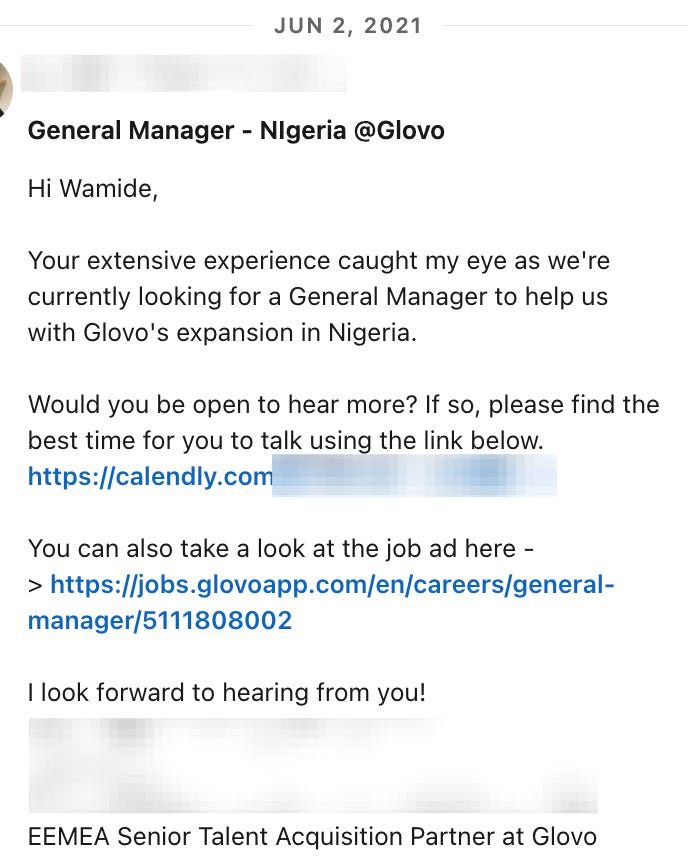
Now even though I was landing these interviews, something often felt off so I paused.
During my maternity leave, I spent ample time doing an inventory audit and decided to change my job search strategy.
I recounted my 8-year career journey, trying to figure out what I had truly enjoyed over the years and what I didn’t. That’s when I realized being in a big corporate or scale up, or having a “big name” on my CV didn’t matter to me at that time. I also didn’t want to continue in operations, I wanted something at the intersection of strategy, partnerships and growth operations.
With this, I became very targeted in my job application. I applied for fewer roles, interviewed for only 3 between October and December 2021.
By January 2022, I had an offer for a senior remote role in tech, and it came without a pay cut.
That’s when I realised the truth most professionals miss:
The goal isn’t a linear career. The goal is a coherent one.
A coherent career is one where your skills compound, even when your titles change. You don’t need to “erase” your past to build a better future. You just need a framework to translate it.
It is 100% possible to pivot at any stage of your career - without starting over, without erasing your past, and without blowing up your income.
If I had to pivot again tomorrow, I wouldn’t:
randomly apply for roles
chase new degrees out of panic
or try to reinvent myself from scratch
I’d follow this 5-step framework to move on purpose, I call it The OnPurpose P.I.V.O.T. Framework.
These aren’t just theories; they are the exact principles I’ve lived, I’ll continue to teach every time a pivot is on the line, and the same system I've used to coach 200+ professionals through their own "uncommon" moves.
So if you’re thinking about making a career switch, here are my 5 Non-Negotiable Rules for the “OnPurpose” Pivot:
Step 1: “P”- Purpose Filter (Know your Why)
When you’re pivoting, uncertainty is normal, but aimlessness is expensive.
You won’t always feel 100% sure -and that’s okay. What matters most is starting from the inside out, not from job titles or trends.
Focus on you and audit your "internal drivers" before looking at job titles.
Ask yourself: Why do I want a change?
Not just what you want to move into, but what you want more of.
Your “why” might be:
more autonomy or flexibility
greater scope or exposure
leadership and decision-making power
alignment with your values or lifestyle
more money, more scale?
Clarity here becomes your filter.
Without it, every opportunity looks tempting - and confusing. With it, decisions get easier.
Step 2: “I” - Inventory Audit (Strengths & Gaps)
Next, take stock of what you already bring to the table. Conduct a skills self-assessment across:
technical skills
soft skills
patterns of problems you’re consistently good at solving
List the skills you already use today that are relevant to where you’re going. These are your transferable strengths - and they matter more than you think.
Then identify your gaps - but be intentional.
You don’t need everything. You need the few skills that unlock credibility in your next move. Ask:
What’s truly required vs. “nice to have”?
Can this gap be filled through short courses, certifications, projects, or on-the-job learning?
Do I really need another degree, or just proof of capability?
This step is about precision, not accumulation.
Use my SWOT analysis workbook to dig deeper into your unique strengths.
Step 3: “V” - Value Translation (Nail the Positioning)
A pivot isn’t a reset. It’s a repositioning.
Your job is to connect the dots between:
what you’ve already done
and the value your next market cares about so the hiring managers don’t have to guess your value.
Same skills. New language. New context.
This is where most pivots tank - not because people lack experience, but because they don’t know how to translate it.
I know exactly how to bridge that gap.
Step 4: “O” - Offer Proof (The Pivot Plan)
You don’t need to learn everything. You need to learn just enough to close the credibility gap.
Identify:
what’s truly required to break in
what can be learned on the job
what needs visible proof
Then build intentionally: projects, case studies, pilots, experiments, portfolios.
Clarity comes from movement - not endless preparation.
Step 5: “T” - Targeted Visibility (Strategic Application)
Most roles are not filled through job boards. A large percentage are filled through referrals, internal recommendations, and conversations that happen before a role is ever posted.
So don’t rely on applications alone.
Share your pivot plan clearly with:
former colleagues and managers
mentors and peers
recruiters and hiring managers
Let people know:
what you’re moving toward
the value you bring
the problems you solve
Use LinkedIn intentionally - especially when your profile clearly tells a repositioned story. This keeps you top of mind when opportunities arise.
This isn’t about “networking harder.”
It’s about making your direction legible to the right people.
The Bottom Line:
You don’t need to blow up your career to change it.
Every successful pivot I’ve helped a professional make followed this exact logic - including Temi’s pivot from Customer Experience to Public Relations.
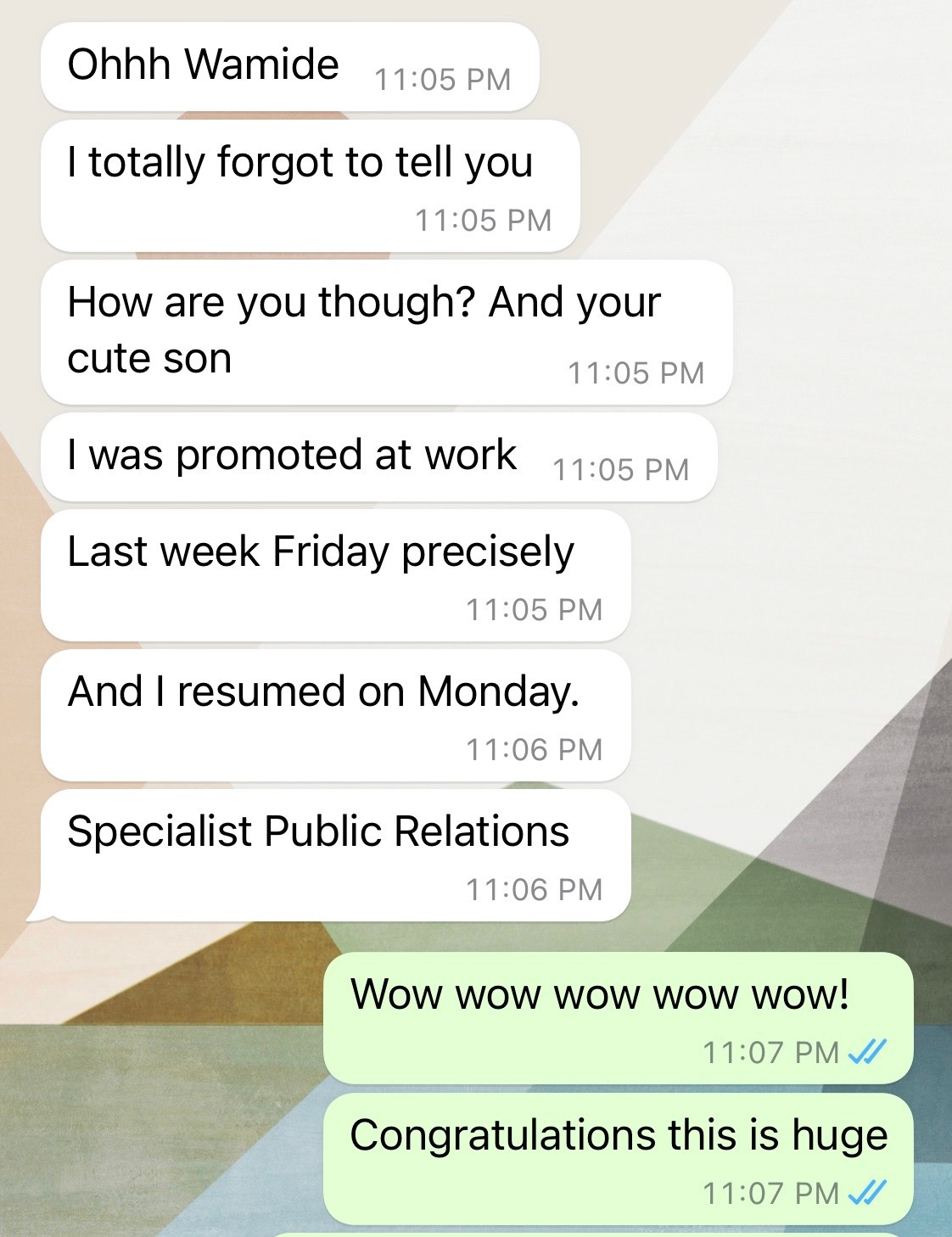
Ready to build your bridge? Let’s do this.
If you’re feeling restless, stuck, or quietly dissatisfied, that’s not a flaw.
That’s information. It’s telling you that something needs to change - not everything, just something.
If you want 1:1 support to map your transferable strengths, identify the markets you’re best positioned for, and turn confusion into a clear, credible next move, let’s work together.
I help experienced professionals pivot without starting from scratch or second-guessing themselves.
You can also reply this email to explore what’s possible.
No panic. No starting over. No wasted experience.
Just a pivot - on purpose.
To your next move,
This was such an insightful read. Makes me know that I’m not crazy. Uncertainty is normal, aimlessness is expensive 🤏🏻🤏🏻🤏🏻. Thank you so much for this Wamide. This puts certain things into perspective.